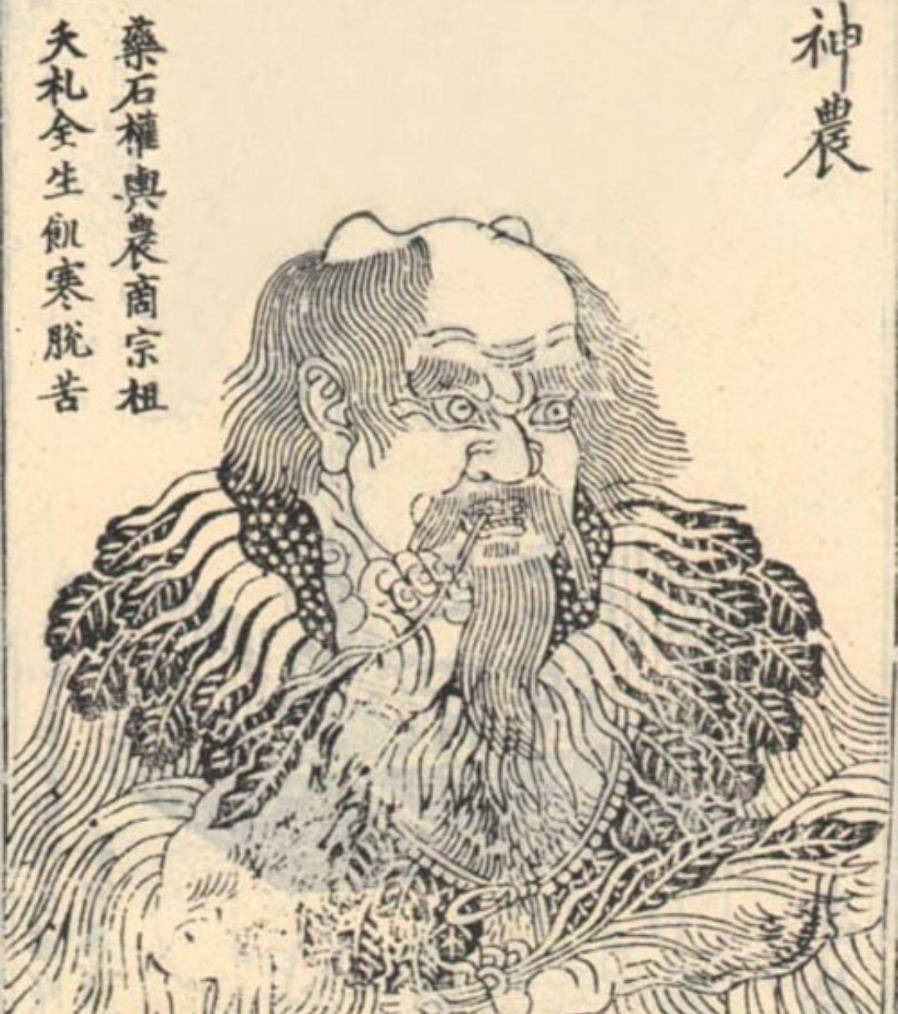
Shen Nong
Introduction
Shen Nong, also known as the "Divine Farmer" and "Father of Agriculture," is a legendary figure in Chinese mythology renowned for his contributions to agriculture and traditional Chinese medicine (TCM). As one of China's mythical Three Sovereigns, Shen Nong is credited with numerous innovations that have significantly impacted Chinese culture and society. This legendary emperor is often depicted as a deity who brought the knowledge of farming and herbal medicine to humankind, establishing the basis for agricultural practices and medical treatment in ancient China. Over time, Shen Nong's story has woven itself into the cultural fabric of Chinese society, emphasizing his role as a pioneer in fields that have shaped the civilization's development.
Mythology
In Chinese mythology, Shen Nong stands as a revered figure, often depicted as one of the Three Sovereigns, legendary rulers who are said to have laid the foundations for Chinese civilization. The mythology surrounding Shen Nong suggests that he experimented with different herbs and plants, ultimately discovering their medicinal properties and potential toxicities. According to legend, Shen Nong diligently tasted countless herbs to understand their effects, sometimes encountering multiple poisons in a single day, which he would then neutralize using his extensive knowledge of medicinal plants, including tea.
He is credited with the discovery of tea when leaves from a wild tea plant accidentally drifted into a pot of boiling water in his garden. This serendipitous discovery underlines the intrinsic bond between Shen Nong and the enduring cultural practice of tea consumption in China.
The mythological tales portray Shen Nong not only as a medical pioneer but also as an agricultural innovator. He is credited with teaching ancient Chinese communities the art of agriculture, including the cultivation of staple crops and the use of tools in farming. His association with agriculture is so profound that he is often referred to as the "Father of Agriculture." Shen Nong's endeavors are believed to have transformed the way people lived, shifting societies from nomadic lifestyles to settled agricultural communities.
Contributions
Agriculture
Shen Nong's contributions to agriculture are foundational to his legendary status. He is revered as the innovator who introduced and popularized the systematic cultivation of crops, significantly altering the trajectory of Chinese civilization. The legend credits him with the invention of the plow, which revolutionized farming by increasing efficiency in planting and harvesting. This advancement allowed for more consistent food production, ensuring the sustenance of growing populations.
Shen Nong's teachings supposedly encompassed a wide range of agricultural practices, from the selection of fertile lands for farming to the development of irrigation techniques. These practices enabled better crop yields and a more stable food supply, laying the groundwork for the development of complex societies. His influence extended to the cultivation of medicinal plants, reflecting a deep understanding of the interconnectedness between agriculture and medicine. Through his guidance, many of the staple crops and medicinal herbs integral to Chinese agriculture and medicine today were first domesticated and cultivated.
Medicine
In addition to his agricultural achievements, Shen Nong is celebrated for his pioneering role in the field of medicine, particularly traditional Chinese medicine (TCM). His relentless pursuit of herbal knowledge is central to his mythos, as he is believed to have sampled hundreds of herbs to identify their healing properties and potential dangers. This exhaustive research culminated in the creation of a comprehensive herbal pharmacopoeia, providing the basis for many of the principles and practices of TCM.
Shen Nong's contributions to medicine are immortalized in the "Shen Nong Ben Cao Jing" or "The Divine Farmer's Materia Medica," a classic text that outlines the properties and uses of numerous herbs and plants. Although the original text is lost, its influence persists in contemporary TCM, where the categorization of herbs and their applications in treating various ailments are still referenced. His exploration of herbal medicine emphasized the importance of balancing the body's internal systems, a concept that remains integral to TCM philosophy. Shen Nong's legacy in medicine has not only shaped the practice of TCM but has also influenced holistic approaches to health and well-being across cultures.
Cultural Impact
Shen Nong's enduring legacy is evident in the profound cultural impact he has left on Chinese society. His legendary status as both a deity and a cultural hero underscores his significance in Chinese folklore and tradition. Shen Nong's contributions to agriculture and medicine have been celebrated in various forms of Chinese culture, including literature, art, and festivals, reinforcing his influence across generations.
The annual Shen Nong Festival, observed in various regions in China, honors his contributions and pays homage to his teachings. This celebration involves rituals and ceremonies that express gratitude for the agricultural practices and herbal knowledge he imparted. Additionally, Shen Nong's image and stories are often depicted in Chinese artwork, highlighting his role in the genesis of civilization and his enduring legacy as a cultural icon.
Shen Nong's influence extends to contemporary practices that incorporate traditional Chinese medicine and agricultural methods into modern life. His story serves as a reminder of the importance of understanding and harmonizing with nature, values that continue to resonate with people today. Shen Nong's mythological and cultural significance remains a testament to his enduring impact on Chinese society and the world at large.








